
 English
  Spanish
  German
  French
  Dutch
Dutch  Portuguese
  Russian
  Hindi
Hindi  Panjabi
  Korean
  Arabic
  Belarusian
  Bengali
  Czech
Czech  Greek
Greek  Croatian
  Italian
  Thai
Thai  Ukrainian
  Japanese


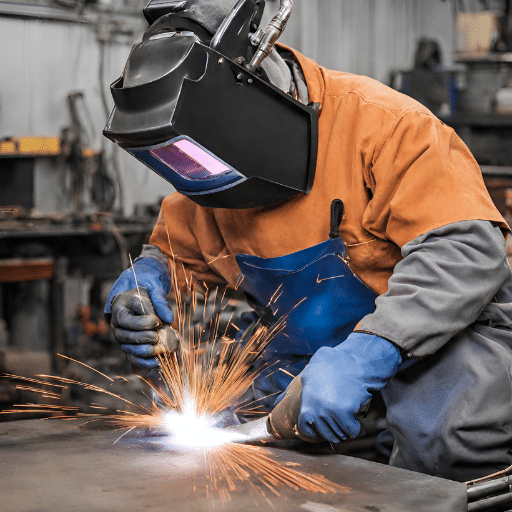
What is the difference between mig and tig welding?

Mig Vs. Tig Welding
Here is a comparison list of MIG (Metal Inert Gas) welding and TIG (Tungsten Inert Gas) welding.
- Complexity: MIG welding is generally more straightforward and more accessible to learn, while TIG welding requires more skill and precision.
- Speed: MIG welding is faster and more efficient, making it suitable for larger projects. In contrast, TIG welding is slower but offers greater control, resulting in high-quality welds.
- Materials: MIG welding is versatile and can be used with a variety of metals and thicknesses. TIG welding, on the other hand, is commonly used for thinner gauge materials.
- Appearance: TIG welding offers a clean, slag-free finish, making it ideal for cosmetic applications. MIG welding can result in spatter, which may require post-weld clean-up.
- Cost: MIG welding equipment is generally less expensive than TIG welding equipment.
- Versatility: While both methods can be used on a variety of metals, TIG welding is better suited for exotic metals and alloys. MIG welding is typically used for common metals such as stainless steel and aluminum.
Difference Between Mig and Tig
To further delve into the differences between MIG and TIG welding, let’s highlight some key characteristics:
- Skill Level: MIG welding is considered a semi-automatic process and is easier to master. TIG welding, in contrast, requires a high level of skill and experience to produce quality welds.
- Shielding Gas: MIG uses a mixture of argon and carbon dioxide or argon and oxygen, while TIG uses pure argon.
- Electrode: In MIG welding, the electrode is a continuously fed wire, while in TIG welding, the electrode is a non-consumable tungsten.
- Control: MIG welding has less control over the heat input, whereas TIG offers independent control over the heat input and filler metal addition.
- Applications: MIG is used in fabrication works, automotive parts, and home repair, while TIG is used primarily in aerospace welding, vehicle, motorcycle, and bicycle manufacture.
- Weld Quality: MIG welding is prone to defects like spatter and porosity, while TIG welding produces higher quality, precise welds but at a slower pace.
- Safety: MIG welding produces lots of heat and fumes, whereas TIG welding is one of the cleanest welding processes available.
In summary, the choice between MIG and TIG welding depends on the specific requirements of the task at hand, including the type of metal, the desired speed and quality of the weld, and the skill level of the welder.
Mig Welding Vs. Tig Welding Comparison
The following list provides a side-by-side comparison of MIG welding and TIG welding:
- Skill Level Required: MIG – beginner to intermediate, TIG – advanced
- Shielding Gas: MIG – argon and carbon dioxide or argon and oxygen mix, TIG – pure argon
- Electrode: MIG – continuously fed wire, TIG – non-consumable tungsten
- Control Over Heat Input: MIG – less control, TIG – more control
- Typical Applications: MIG – fabrication, automotive parts, home repair, TIG – aerospace, vehicle, motorcycle, and bicycle manufacturing
- Weld Quality: MIG – prone to defects, TIG – high quality and precise but slower
- Safety: MIG – produces high heat and fumes; TIG – is one of the cleanest processes
Remember that the choice between MIG and TIG will depend on the specific requirements of the project, the type of metal, the desired speed and quality of the weld, and the welder’s skill level.
Mig and Tig Welding Techniques
MIG Welding Techniques
In MIG welding, two fundamental techniques are commonly utilized: push and pull. In the push technique, the MIG gun is directed towards the welding direction, with the angle of the weapon typically being 10-30 degrees. This method provides good visibility of the weld pool, but it may lead to a shallow penetration. On the other hand, in the pull technique, the MIG gun is angled back towards the finished weld. Although it may limit visibility, it provides deeper penetration.
TIG Welding Techniques
TIG welding also encompasses two primary techniques: dip and dab and lay wire. In the dip and dab technique, the tungsten electrode is held in one hand and a filler rod in the other. The welder dips the filler rod into the weld pool and retracts it, repeating this process consistently. The lay wire technique involves laying the filler rod in the joint and moving the torch along it, melting the rod into the joint. This technique typically results in a larger weld bead.
Both MIG and TIG welding techniques necessitate practice and precision. The choice between them depends on the specific welding task, the materials at hand, and the welder’s skill level.
Type of Metals Used in Mig and Tig Welding
MIG and TIG welding methods are both versatile and can be used with a variety of metals.
MIG Welding Metals
MIG welding is generally compatible with larger, thicker assemblies and is very effective with metals such as steel, stainless steel, and aluminum. It’s important to note that each metal requires a specific type of transfer (spray, globular, short-circuit) and a particular kind of shielding gas.
TIG Welding Metals
TIG welding, known for its precision, is typically used for thinner gauge materials. It can be used with a wide range of metals, including steel, stainless steel, aluminum, nickel alloys, magnesium, copper, brass, bronze, and even gold. It requires more skill than MIG welding due to its precise nature, but it allows for more robust and higher-quality welds.

Remember, the metal being used will directly impact the equipment settings, technique, and type of filler metal. Therefore, understanding the nature and compatibility of different metals with MIG and TIG welding is crucial to achieving a successful weld.
How does mig welding differ from tig welding in terms of process?

Mig Welding Process
MIG welding, or Metal Inert Gas welding, operates through a continuous feed of a wire electrode that melts into the joint to form a weld. The process begins with the welder squeezing a trigger that both initiates the flow of the shielding gas and energizes the wire feeder. As the wire electrode comes into contact with the workpiece, an electric arc forms, providing the required heat to melt the electrode, thus producing the weld.
The MIG welding process lays down a significant amount of material quickly, making it an ideal choice for thicker materials and larger projects. It’s more accessible for beginners due to the semi-automatic nature of the wire feed, and it doesn’t necessitate the same level of manual dexterity as TIG welding. However, it’s essential to have proper control over the speed of the wire feed and the length of the arc to ensure a clean and effective weld.
Tig Welding Process
TIG welding, or Tungsten Inert Gas welding, is a process that involves using a non-consumable tungsten electrode to deliver the current to the welding arc. The welder uses one hand to hold the TIG torch that produces the hook and the other hand to add filler metal to the weld joint. Unlike MIG welding, the metal pieces being welded are melted to form the joint, and the filler metal is used to supplement the weld.
TIG welding is known for its high level of precision and control, allowing for robust, high-quality welds. It’s most effective on thin materials and smaller projects where attention to detail is paramount. However, this process is more complex and requires a higher degree of skill and talent than MIG welding. The welder needs to carefully control the heat input and filler metal feed simultaneously, which takes practice to master.
Mig and Tig Welding Equipment
Both MIG and TIG welding require specific equipment for their respective processes.
MIG Welding Equipment
For MIG welding, the essential equipment includes a welding gun, a welding machine, and a wire feed unit. The wire feed unit feeds a constant and adjustable stream of wire to the gun at a controlled speed. Other necessary equipment includes a power supply to generate the required electric current, a wire electrode reel, and a shielding gas supply. Many modern MIG welders come with integrated wire feed units and power supplies, simplifying the setup process.
TIG Welding Equipment
TIG welding equipment comprises a TIG torch with a tungsten electrode, a power supply, and a filler metal. A foot pedal control is often used to modulate the current while welding. Additionally, a shielding gas (usually argon) is required to protect the weld area from atmospheric contamination. TIG welding often takes place in a more controlled environment due to the process’s sensitivity to external conditions.
In both MIG and TIG welding, personal protective gear such as welding helmets, gloves, and safety glasses are essential for the safety of the operator.
Filler Materials in Mig and Tig Welding
In the realm of welding, filler materials play a pivotal role, serving as the intermediary that fuses the workpieces. The choice of filler material significantly influences the strength, corrosion resistance, and overall quality of the weld.
MIG Welding Filler Materials
For MIG welding, the wire electrode serves as the filler material. It is continuously fed from a spool and melts into the weld pool during the process. The wire is typically composed of a similar or identical material as the workpieces. Common types include carbon steel, stainless steel, and aluminum wires. Specific grades and diameters are used depending on the nature of the workpiece and the desired characteristics of the weld.
TIG Welding Filler Materials

TIG welding, in contrast, uses a separate filler rod held in the welder’s other hand, allowing for greater control over the weld. These rods come in various materials and diameters to match the base material, including steel, stainless steel, aluminum, and other alloys. The specific type of rod chosen can significantly influence the characteristics of the weld, including its strength, corrosion resistance, and appearance.
Welding Torch Used in Tig and Mig Welding
The welding torch in both TIG and MIG welding serves as the conduit for the electricity and filler material, directing it toward the workpiece. In MIG welding, the torch is equipped with a trigger that controls the wire feed, gas flow, and electricity simultaneously. This allows for a one-handed operation. The torch also has a nozzle that directs the shielding gas onto the weld area.
In TIG welding, the torch carries the tungsten electrode, which generates the arc and a separate shielding gas supply. It is designed for a two-handed operation, with one hand guiding the torch and the other feeding the filler rod into the weld area. This requires a higher skill level and offers more control over the welding process. Both types of torches come in various sizes and styles to accommodate different types of welding tasks and operator preferences.
Which type of welding is better for specific materials?

Mig Welding for Stainless Steel
MIG welding is efficient for stainless steel due to its efficiency and adaptability.
- Ease of Use: MIG welding is relatively easy to learn and use, making it suitable for beginners or less experienced welders.
- Efficiency: MIG welding delivers a continuous supply of wire, allowing for longer welds without the need to stop and replace the filler material. This makes it an efficient choice for larger projects.
- Adaptability: MIG welding is adaptable to a variety of joint types and thicknesses. It can be used effectively on stainless steel of different grades and thicknesses.
- High Productivity: With MIG welding, it’s possible to lay down a large amount of welded metal in a short time, increasing productivity.
- Clean Welds: MIG welding typically results in clean welds with less spatter and smoke compared to some other welding methods.
It’s important to note that while MIG welding offers many advantages, it may not be the ideal choice for all stainless steel welding applications. Considerations such as the specific grade of stainless steel, the thickness of the material, and the desired weld characteristics are all factors that can influence the choice of welding method.
Tig Welding for Aluminum
TIG welding is often chosen for aluminum due to its precision and versatility. Here are some of the reasons why it is preferred:
- Controlled Heat Input: TIG welding offers excellent control over the heat input, making it an ideal choice for thin aluminum.
- Precision: TIG welding enables very precise welds, which is essential when working with a material like aluminum that requires careful handling.
- Clean Welds: The process of TIG welding can result in clean, spatter-free welds, which is essential for maintaining the integrity of aluminum.
- Versatility: TIG welding can accommodate a wide range of aluminum alloys and thicknesses, making it a versatile choice for various applications.
- High-Quality Welds: TIG welding is known for producing high-quality, visually appealing welds, which is a significant advantage when appearance matters.
- Non-Consumable Electrode: TIG welding uses a non-consumable electrode, eliminating electrode contamination that can negatively impact the weld quality.
As with any welding method, TIG welding isn’t suitable for all aluminum welding tasks. Factors such as material thickness, joint design, welding position, and production speed should all be considered when choosing a welding method for aluminum.
Mig Vs. Tig Welding for Mild Steel
When it comes to welding mild steel, both MIG (Metal Inert Gas) and TIG (Tungsten Inert Gas) methods have their advantages and drawbacks. Here is a comparison:
- Speed: MIG welding is generally faster than TIG, making it a more efficient option for large-scale or production welding tasks.
- Skill Level: MIG welding is easier to learn and use, making it a more feasible option for beginners. TIG welding requires a higher degree of skill and precision.
- Cost: MIG welding equipment is typically cheaper than TIG, making it a more cost-effective choice, especially for hobbyists or small businesses.
- Quality: TIG welding generally provides superior quality welds with less spatter and better aesthetics than MIG. So, when the quality of the weld is paramount, TIG is often the way to go.
- Versatility: MIG welding is more versatile in terms of the types of materials it can weld, whereas TIG welding is best suited for thin materials.
- Penetration: MIG welding typically provides deeper penetration than TIG, making it a more suitable choice for welding thick materials.
In summary, the choice between MIG and TIG welding for mild steel will largely depend on the specific application, the skill level of the welder, and the budget.
Arc Welding Vs. Tig Welding for Specific Materials
Just as with MIG and TIG welding, the choice between Arc and TIG welding can depend on the specific material being welded. Here’s a comparison:
- Material Thickness: Arc welding, mainly Stick welding, can be used on thicker materials than TIG welding, which excels with thin materials.
- Material Type: TIG welding offers broad material compatibility, including non-ferrous metals. Conversely, arc welding, particularly stick welding, is usually limited to iron and steel.
- Welding Position: Stick (Arc) welding is versatile and can be used in all positions, while TIG welding is more challenging in places other than flat.
- Quality: TIG welding tends to produce cleaner and more precise welds than Arc welding, making it a better choice for tasks where aesthetics and precision are crucial.
- Skill Level: Arc welding is more accessible to beginners, while TIG welding requires more skill and finesse.
- Cost: Arc welding equipment is generally less expensive than TIG welding equipment.
- Speed: Arc welding typically operates at higher rates than TIG welding.
In conclusion, the choice between Arc and TIG welding for specific materials will largely depend on the type and thickness of the material, the required weld quality, the welder’s skill level, and budget constraints.
Gas Metal Arc Welding Vs. Gas Tungsten Arc Welding for Diverse Materials
As with the previous comparisons, the choice between Gas Metal Arc Welding (GMAW or MIG) and Gas Tungsten Arc Welding (GTAW or TIG) also depends on the type of materials involved. Here’s a comparison:
- Material Thickness: MIG welding is practical for thicker materials, while TIG welding is ideal for thin to medium-thickness materials.
- Material Type: MIG welding is usually used for steel and aluminum, whereas TIG welding offers a broader range of material compatibility, including non-ferrous metals.
- Welding Position: MIG welding is versatile in all positions, but TIG welding can be more challenging in places other than flat.
- Quality: TIG welding produces high-quality, precise welds, making it suitable for tasks where aesthetics are critical.
- Skill Level: TIG welding requires a higher skill level and knowledge compared to MIG welding.
- Cost: MIG welding equipment is generally less expensive than TIG welding equipment.
- Speed: MIG welding operates at higher rates than TIG welding.
Therefore, the choice between MIG and TIG welding for diverse materials primarily depends on the material type and thickness, the required weld quality, the skill level of the welder, and budget constraints.
What are the advantages and disadvantages of mig and tig welding?

Advantages of Mig Welding
- Ease of Use: MIG welding is generally easier to learn and use, making it ideal for beginners.
- Speed: MIG welding is faster than other welding methods, which makes it a preferable choice for larger projects.
- Versatility: This type of welding works well with a wide range of metals and thicknesses.
- Efficiency: MIG welding allows for long, uninterrupted welds because the electrode continuously feeds into the weld pool.
- Quality: While not as precise as TIG welding, MIG welding still offers good weld quality suitable for most applications.
Disadvantages of Tig Welding
- Complexity: TIG welding is more complex and requires a higher skill level compared to other welding methods. This learning curve can be a barrier for beginners.
- Speed: TIG welding is slower than other processes like MIG welding, making it less suitable for large-scale projects.
- Cost: The equipment and materials for TIG welding are generally more expensive. Also, due to its slower speed, labor costs can be higher.
- Physical Demand: TIG welding requires a steady hand and close attention to detail, making it more physically demanding.
- Limitations on Materials: While versatile, TIG welding is not suitable for all types of metals, especially some coated or dirty materials that could contaminate the torch.
Comparison of Weld Pool Formation in Mig and Tig Welding
In MIG (Metal Inert Gas) and TIG (Tungsten Inert Gas) welding, the formation of the weld pool differs significantly due to the distinct techniques employed.
In MIG welding, the weld pool is formed by an electrode, which is continuously fed into the weld area. This results in a larger, more fluid weld pool, allowing for longer, unbroken welds. The electrode’s continuous feeding leads to a faster deposition rate, making MIG welding well-suited for larger projects. However, this rapid weld pool formation could also result in a less precise weld, mainly when dealing with thin or delicate materials.
On the other hand, TIG welding employs a non-consumable tungsten electrode to form the weld pool. This method results in a smaller, more controlled weld pool, allowing for more precision and cleaner welds. The slower weld pool formation in TIG welding affords a greater degree of control, making it ideal for intricate work or use with exotic metals. Nonetheless, this high degree of precision and control often comes at the expense of speed and cost-efficiency.
Experienced Welder’s Perspective on Mig and Tig Welding
From an experienced welder’s viewpoint, both MIG and TIG welding hold specific advantages and challenges. Here’s a list that encapsulates this perspective:
- Efficiency: MIG welding often gets the nod for larger projects thanks to its swift deposition rate, resulting in shorter project completion times. TIG welding, while slower, offers precision and is preferred for intricate work.
- Material Compatibility: Welders have found MIG welding to be more versatile with a broader array of metals and thicknesses. TIG welding shines when working with exotic or thinner metals, where precision is paramount.
- Skill Requirement: MIG welding is generally perceived as more straightforward to learn for beginners. In contrast, TIG welding requires a higher skill level and more practice to master, especially given its high degree of manual control.
- Quality of Weld: TIG welding often results in cleaner and visually appealing welds due to the control it offers, while MIG welding, though efficient, might not provide the same level of aesthetic finish.
- Cost: MIG welding is often faster and more cost-efficient, making it a more economical choice for large-scale projects. TIG welding, known for its quality results, usually commands a higher price, both in terms of equipment and operational costs.
Speed and Quality Comparison in Mig and Tig Welding
When comparing speed and quality between MIG and TIG welding, it’s clear that each method excels in different areas. MIG welding, due to its continuous feeding of filler material, offers a high deposition rate, making it the faster way. This speed is beneficial in large-scale projects or when welding thicker materials, providing efficiency and cost-effectiveness. However, the trade-off for this speed can be a potentially lower aesthetic quality of the weld, with instances of spatter or less clean lines.
On the other hand, TIG welding is a slower process as it requires a more controlled and deliberate feeding of the filler metal. Despite its slower pace, TIG welding offers superior quality welds, characterized by cleaner lines and an overall more aesthetically pleasing result. It excels in tasks that require high levels of precision, mainly when dealing with exotic or thinner metals. Nonetheless, this higher quality output and accuracy comes with an increased operational cost and demands a higher skill level from the welder.
In conclusion, the choice between MIG and TIG welding ultimately depends on the specific priorities of the project, be it speed, cost, quality, or material compatibility.
Which welding technique, Mig or Tig, is better suited for specific applications?
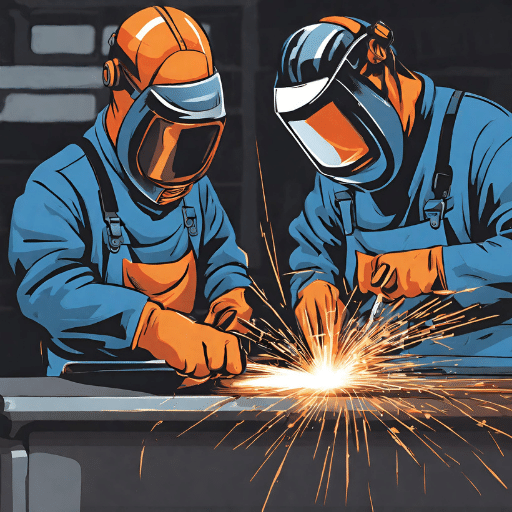
Use of Mig Welding in Automotive Repair
MIG welding is extensively used in automotive repair due to its speed, efficiency, and versatility. It is particularly well-suited for joining steel and aluminum panels, which are standard materials in the automotive industry. The continuous feed of wire in MIG welding allows for long welds without stopping, making it an efficient choice for larger projects such as repairing body panels or frames. The technique is also effective in filling gaps in materials and joining uneven surfaces, which are often encountered in repair work. Despite the potential for less aesthetically pleasing welds compared to TIG welding, the speed, and cost-effectiveness of MIG welding often outweigh this factor, especially in a commercial repair setting where the interior of welds is not typically visible. Additionally, MIG welding requires less skill and practice to master than TIG welding, enabling broader use among automotive technicians.
Tig Welding Applications in the Aerospace Industry
TIG welding plays a crucial role in the aerospace industry due to its precision, quality, and versatility. It is particularly apt for the following applications:
- Airframe fabrication: The high precision and quality of TIG welding make it the preferred choice for airframe fabrication, where reliability and performance are paramount.
- Engine Component Repair: TIG’s ability to weld exotic metals like titanium, nickel, and Inconel, which are common in aerospace engine components, is a significant advantage.
- Fuel Tank Construction: TIG welding, owing to its capability to produce leak-proof and high-integrity welds, is often used for constructing fuel tanks.
- Custom Part Fabrication: Aerospace often requires custom parts, and TIG welding’s versatility makes it ideal for creating these components.
- Spacecraft Assembly: The high precision and control offered by TIG welding make it a top choice for the assembly of spacecraft, where every weld must be perfect.
These applications highlight how TIG welding’s superior quality and precision, albeit at a higher cost, make it invaluable in the high-stakes environment of the aerospace industry.
Welding Methods for Construction Industry: Mig Vs Tig
In the construction industry, both MIG and TIG welding are widely utilized, but each has its unique applications and advantages.
MIG Welding: Due to its speed, efficiency, and ease of use, MIG welding is often preferred in the construction industry, where mass production and rate are crucial. It’s ideal for welding steel and aluminum, which are abundantly used in construction. Its ability to fill significant gaps makes it well-suited for structural steel welding and heavy equipment repair.
TIG Welding: Although slower and more complex than MIG, TIG welding offers greater control and higher quality welds. It’s mainly used in construction for specialized tasks that require precision and clean welds. For instance, stainless steel welding, custom gate or railing fabrication, or any work where aesthetics are essential, TIG welding is the better choice.
In conclusion, while MIG welding is typically favored for its speed and ease of construction, TIG welding is chosen for tasks demanding precision and high-quality finish. The choice between MIG and TIG welding ultimately depends on the specific requirements of the construction project.
Precision Welding by Tig for Intricate Designs
In the realm of intricate and complex designs, TIG welding stands out due to its superior precision and control. Here are some of its critical applications:
- Jewelry Design: TIG welding’s precision is particularly advantageous in jewelry making, where designs are often intricate, and the materials used are costly and delicate.
- Automotive Customization: For custom car parts or bodywork, where precision and quality are paramount, TIG welding is often the method of choice.
- Sculpture Art: In creating metal sculptures, artists often prefer TIG welding due to its ability to create clean, detailed welds on a variety of metals.
- Architecture: In architectural elements such as custom railings, staircases, or decorative metalwork, TIG welding’s precision ensures high-quality finishes.
- Aerospace Components: The precision and control offered by TIG welding make it suitable for manufacturing intricate components in the aerospace industry.
- Medical Devices: The accuracy of TIG welding is essential in the fabrication of medical equipment, where adherence to strict standards and specifications is a must.
In all these applications, TIG welding’s precision and quality are critical in producing intricate designs and products.
Mig Welding’s Efficiency in Large-Scale Production
When it comes to large-scale production and construction projects, the efficiency of MIG welding truly shines. Here are some instances where MIG welding becomes indispensable due to its speed and efficiency:
- Industrial Fabrication: For large industrial projects that require vast amounts of welding, MIG is often the preferred method due to its faster welding speed.
- Automotive Manufacturing: The automotive industry heavily relies on MIG welding for its efficiency in joining large metal sections quickly and robustly.
- Shipbuilding: In the shipbuilding industry, where large and thick metal plates need to be joined, MIG welding offers the necessary speed and penetration.
- Infrastructure Construction: MIG welding’s efficiency is crucial in building infrastructure such as bridges, highways, and buildings, where large volumes of metal need to be joined securely and rapidly.
- Heavy Equipment Production: For the manufacturing of heavy machinery and equipment, MIG welding is often utilized due to its high deposition rate.
In all these cases, the efficiency and speed of MIG welding help to maintain productivity and meet tight production schedules.
Frequently Asked Questions

Q: What is the difference between Mig welding and Tig welding?
A: Mig welding uses a consumable wire electrode and a shielding gas, while Tig welding uses a non-consumable tungsten electrode and a shielding gas.
Q: When should I use Mig welding?
A: Mig welding is best used for welding thicker materials, and it is also faster than Tig welding, making it a suitable choice for high-production environments.
Q: When should I use Tig welding?
A: Tig welding is ideal for welding thinner materials, and it provides greater control and precision, making it suitable for more intricate and detailed welds.
Q: What are the advantages of Mig welding over Tig welding?
A: Mig welding is known for its speed, efficiency, and ability to handle thicker materials, making it a preferred choice for many industrial applications.
Q: What are the advantages of tip welding over mig welding?
A: Tig welding offers superior control and quality and produces cleaner welds, making it the preferred choice for high-quality welds on thinner materials or intricate designs.
Q: Can I weld aluminum using Mig or Tig welding?
A: Yes, both Mig and Tig welding can be used to weld aluminum, with Tig welding being especially popular due to its ability to produce high-quality, clean welds on aluminum.
Q: What are the main differences between Mig and Tig welding?
A: The primary differences lie in the type of electrode used, the welding speed, control, and suitability for different material thicknesses and welding applications.
Q: Is Mig welding better than Tig soldering for all applications?
A: Mig welding is better for specific applications, particularly those involving thicker materials or where speed and efficiency are essential. However, Tig welding excels in precision and quality, making it the preferred choice for specific applications.
Q: Can I use both Mig and Tig processes in the same welding project?
A: Yes, it’s possible to use both Mig and Tig processes in the same project, primarily when different materials or thicknesses are being welded, allowing for versatility and optimal results.
Q: What are the key considerations when deciding between Mig and Tig welding?
A: Factors such as material thickness, desired welding speed, control requirements, and the quality of the weld should be taken into account when deciding between Mig and Tig welding processes.
References
- MillerWelds (Manufacturer Website): MIG vs TIG Welding – Comprehensive comparison of MIG and TIG welding, detailing each method’s advantages, applications, and equipment requirements.
- Welding Insider (Blog Post): MIG vs TIG Welding – This blog post offers a layman’s guide to the differences between MIG and TIG welding, with easy-to-understand explanations.
- American Welding Society (Professional Organization): TIG Welding – In-depth resource on TIG welding from a leading professional organization in the welding industry.
- The Fabricator (Article): MIG vs TIG: The Simple Guide – This article gives a simplified explanation of MIG and TIG welding processes and their applications.
- Lincoln Electric (Manufacturer Website): TIG Welding Basics – Detailed guide on TIG welding basics, including equipment, process, and safety measures.
- Welding Guru (Blog Post): MIG Welding: Guide & Tips – A blog post that provides detailed tips and guidelines on MIG welding, with a focus on practical application.
- Hobart Welders (Manufacturer Website): MIG Welding Basics – This manufacturer’s guide covers the basics of MIG welding, including equipment and safety considerations.
- Welding Handbook, 9th Edition, Volume 2 (Book): MIG & TIG Welding – Academic reference book that covers MIG and TIG welding in great detail, including the science behind the methods and best practices.
- Journal of Materials Processing Technology (Academic Journal): Study on MIG and TIG Welding Processes – This academic paper investigates and compares the MIG and TIG welding processes in the context of materials processing.
- The Welding Master (Blog Post): MIG vs TIG Welding: Which One Is Better? – A blog post that directly compares MIG and TIG welding, discussing the pros and cons of each method and suggesting scenarios where one might be preferred over the other.


